
Macroeconomics · Monetary Economics · Macroeconometrics

Borağan Aruoba

Professor of Economics at the University of Maryland. Research on monetary economics, firm dynamics, macroeconometrics, nonlinear models, and measurement.

BA
Borağan AruobaBorağan AruobaHomepage photographResearch photographResearch photographResearch photographHousing research photographHomepage photograph
About

Research across theory, data, and policy

Borağan Aruoba is a Professor in the Department of Economics at the University of Maryland. He received his PhD from the University of Pennsylvania in 2004 and joined the faculty at Maryland that year. He is a macroeconomist with both theoretical and empirical interests.

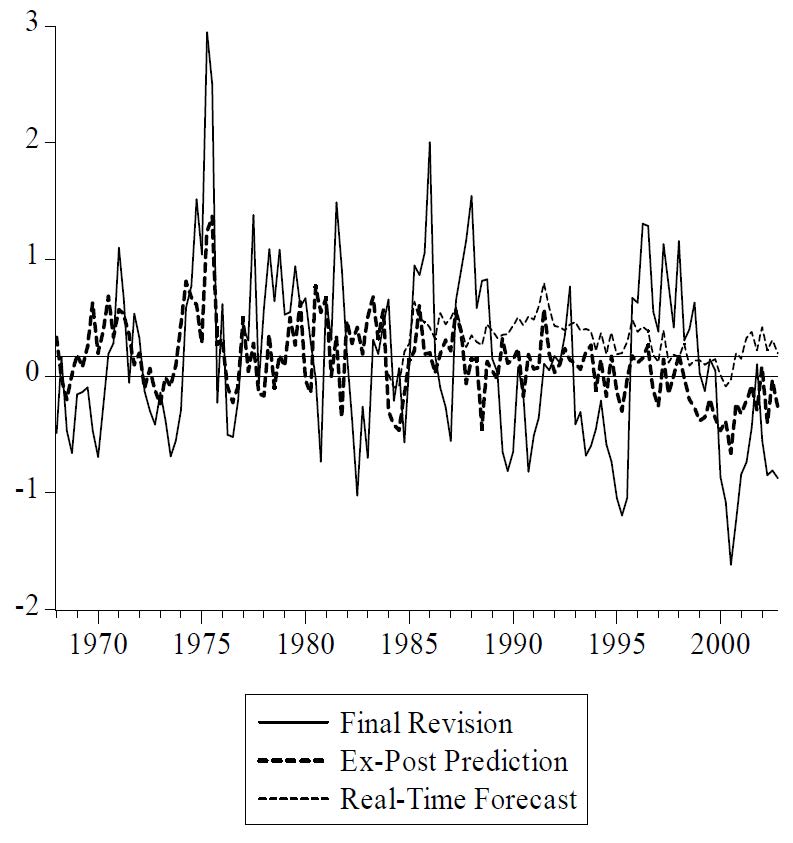
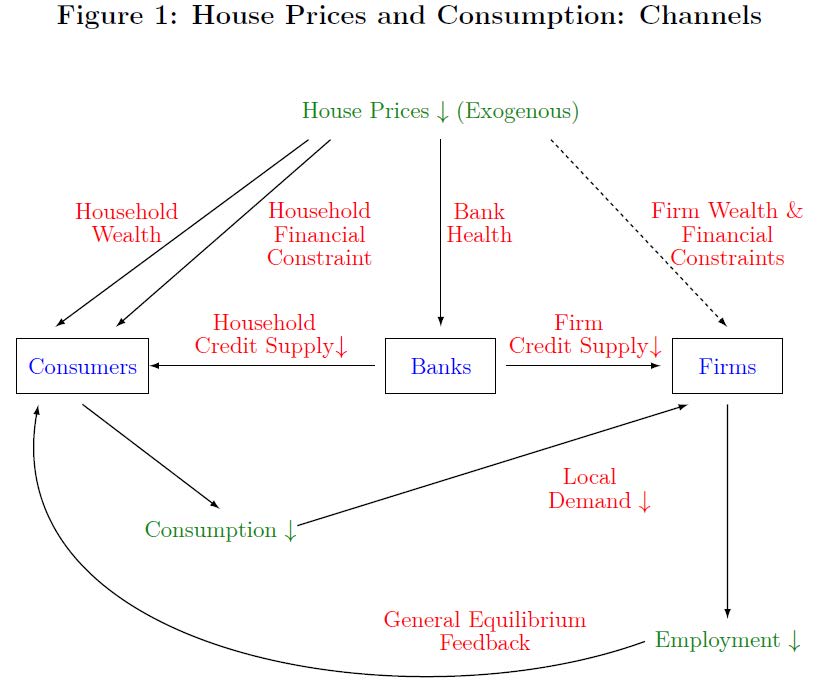
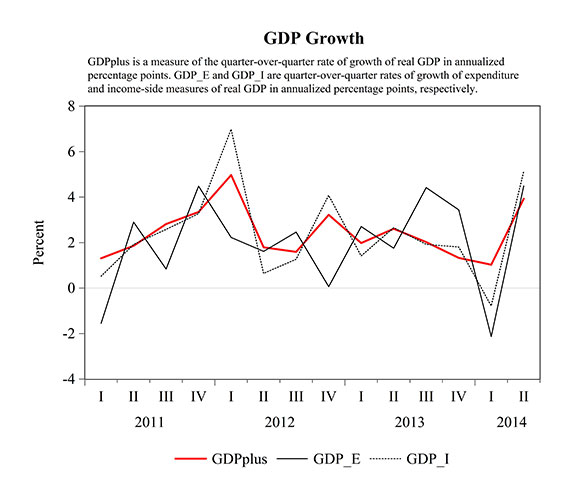
On the theoretical front, he has worked on the dynamics of an economy when it is at the zero lower bound of nominal interest rate and in general on nonlinearities in macroeconomic models. His recent work employs state-of-the-art models with heterogenous firms and menu costs, often utilizing detailed micro data. On the empirical front, he works on understanding statistical properties of data revisions, the yield curve and factor models. His index for tracking business cycles, a new measure of GDP and term structure of inflation expectations are implemented by the Federal Reserve Bank of Philadelphia. His recent research tackles a wide range of issues such as obtaining a new measure for monetary policy shocks for the U.S., understanding the link between house values and consumption at the individual level, and analyzing how firms change their pricing behavior under distress.

Recent work

Selected research

View all research →

Reviving Micro Real Rigidities: The Importance of Demand Shocks

Review of Economic Studies, accepted.

We revisit the role of micro real rigidities as a driver of monetary non-neutrality, using a simple menu-cost model featuring non-constant elasticity of demand with both idiosyncratic productivity and demand shocks. The model is calibrated to match firm-level productivity and demand processes estimated from U.S. data. Despite its simplicity, the calibrated model overturns prior negative findings in the literature on micro real…

Identifying Monetary Policy Shocks: A Natural Language Approach

American Economic Journal: Macroeconomics, forthcoming.

We develop a novel method for the identification of monetary policy shocks. By applying natural language processing techniques to documents that Federal Reserve staff prepare in advance of policy decisions, we capture the Fed’s information set. Using machine learning techniques, we then predict changes in the target inte…

Pricing Under Distress

We isolate the anticipation effect of uncertainty on firms’ price-setting behavior using a quasi-natural experiment: the 2019 Social Uprising in Chile. During the 31-day period following the outbreak of nationwide protests and riots, the frequency of supermarket price changes fell by about half, while the average size of adjustments rose by about half. Suppliers’ prices remaine…

The Long and Variable Lags of Monetary Policy: Evidence from Disaggregated Price Indices

Journal of Monetary Economics, 2024, 148 Supplement, 103635.

We study how monetary policy affects subcomponents of the Personal Consumption Expenditures Price Index (PCEPI) using local projections. Following a monetary policy contraction, the response of aggregate PCEPI turns significantly negative after over three years. There are stark differences in the timing and magnitude of the responses across price categories, including some prices that show an initially positive response. We di…